Home » Commercial Scaffolding Services » Commercial Scaffolding Gloucestershire
We take commercial scaffolding work across the whole of Gloucestershire — Cirencester and the Cotswolds through to Gloucester, Cheltenham, Stroud and the Forest of Dean. We are based at Enslow, near Kidlington, and on commercial jobs the travel is rarely the deciding factor: a contract of any length absorbs it, and we would rather quote honestly for a county we actually cover than pretend to a local depot we do not have.
If you want the technical detail on how we price and build commercial scaffolds generally — duty classes, design, inspection regime and handover — that is on our main commercial scaffolding hire page. This page is about what is different here.
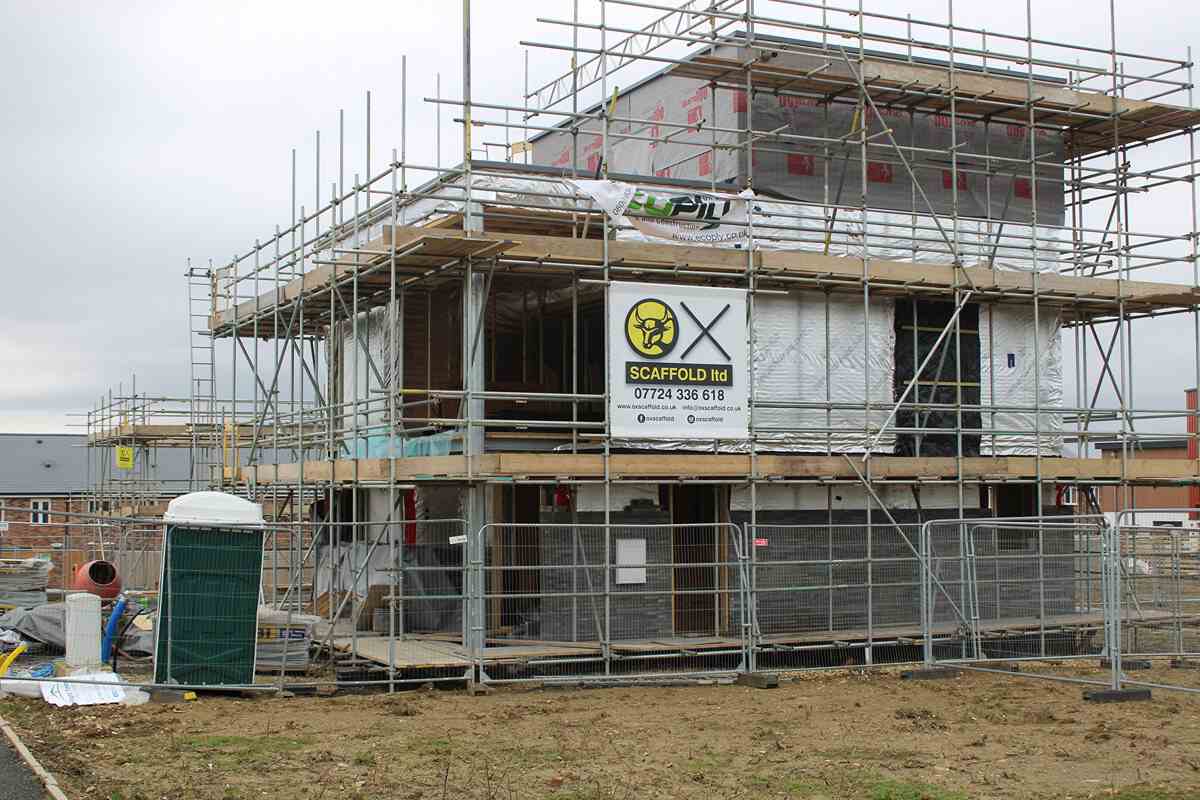
Gloucestershire is not one kind of building, and the four parts of it we work in ask for four different scaffolds.
The Forest of Dean and the far west of the county are the longest runs from us. We will still quote them for commercial work, and we will tell you plainly if the mobilisation makes us the wrong choice for a short job.
Gloucestershire County Council is the highway authority. If any part of the scaffold stands on a public footway or road anywhere in the county, the licence comes from them under section 169 of the Highways Act 1980 — not from the district council, and not from the city. That holds whether the job is in Gloucester, Cheltenham, Stroud or a Cotswold village.
Your district handles planning, conservation area and listed building matters, and which one depends on where you are: Gloucester City, Cheltenham Borough, Stroud, Cotswold District, Tewkesbury or Forest of Dean. On a listed commercial frontage both conversations usually need to happen, and the conservation one is the slower of the two.
Two practical points. Licence fees are charged by duration, so on a commercial programme running months rather than weeks the licence is a real line in the budget and not a rounding error. And where the public passes beneath a frontage you are normally into a protection fan, a boarded gantry or a lit walkway — all designed items, and the council will often tell you which it wants rather than leave the choice to you.
We apply for the licence as the scaffolding contractor. Any fee we quote is indicative until the application goes in, because it varies with footway width and duration.
Where we work in the county, and what tends to come up in each:
Our nearest part of the county, around 30 miles from the yard — closer than Milton Keynes, which we cover routinely. Stone commercial frontages, listed pubs and hotels, and the same fixing and conservation constraints we deal with daily in west Oxfordshire.
Regency terraces and stucco frontages, tall elevations, a great deal of it listed. The recurring technical issue is that the render is not the structure, so the tie strategy has to be settled at design stage rather than on site.
City-centre commercial and the docks regeneration, plus the M5 corridor industrial units at Quedgeley and Brockworth. Tight public footways in the centre; tall cladding and gutter work with limited tying on the sheds.
Mill buildings, tall and frequently on steep ground. On a sloping site the foundation and a level first lift are the job — stepped bases, sole plates and a design that accounts for the fall rather than ignoring it.
The longest runs from Enslow. We quote them for commercial work and take plenty of it, but we will say honestly when the mobilisation makes us the wrong choice for a short job.
Because on commercial work you are buying a design, a duty class, an inspection regime and a handover file — not a postcode. We are CISRS-qualified, CHAS Advanced accredited, carry £10 million public liability and have been Oxfordshire Prestige Awards Scaffold Company of the Year since 2020.
We will also be straight with you about the cases where a local firm is the better answer. A two-week domestic job in the Forest of Dean is one of them. A commercial contract running months, where the design and the paperwork decide whether your programme holds, is not.
Call 01869 254017 or email info@oxscaffold.co.uk with the elevations, the trade working off the scaffold and roughly how long you need it.
We take commercial work across the whole county and have done for years. Cirencester and the Cotswolds are about 30 miles from our yard at Enslow — closer than Milton Keynes, which we cover routinely. Gloucester, Cheltenham and Stroud are further, and for a commercial contract of any length the travel is absorbed in the programme. For a short domestic job in the far west we will tell you a local firm is the better answer.
Gloucestershire County Council, under section 169 of the Highways Act 1980, for anywhere in the county — not the district or city council. That applies equally in Gloucester, Cheltenham, Stroud and the Cotswold villages. Your district council handles planning, conservation area and listed building matters separately, and on a listed frontage both conversations need to happen.
The same drivers as anywhere: the duty class the platform has to carry, the area of the elevations, how long you need it, and whether any of it stands on the public highway. Travel is a small part of a commercial job and a large part of a two-day one, which is the honest reason we are competitive on the former and not the latter. Send us the elevations, the trade working off the scaffold and the hire period and we will give you a firm figure.
Yes, and most of our heritage work is exactly this. On stucco the render is not the structure, so ties go into sound brickwork behind it or the load goes to the ground on independent towers. On Cotswold stone the problem is that the stone is soft and friable and will not reliably take anchors where you want them. Either way the tie strategy is settled at design stage, not on site.
Regularly — the M5 corridor around Quedgeley and Brockworth is a lot of cladding, roofline and gutter work. The technical constraint on a portal frame is that there is very little to tie into, so the design usually goes freestanding or kentledged rather than tied, and that has to be priced in at the start.
The foundation is the job. A scaffold on sloping ground needs stepped bases, proper sole plates and a level first lift, with the design accounting for the fall rather than ignoring it. It costs more than the same elevation on flat ground and anyone quoting it as though it were flat has not looked at the site.
We provide access solutions tailored to your requirements and have experience delivering on projects of considerable scale. Incorporated in 2018, Ox Scaffold Ltd have shown credibility within the industry and this was recognized by the Oxfordshire Prestige Awards from 2020 to present, winning ‘Oxfordshire’s Scaffold Company of the Year’.
Copyright © OX Scaffold Ltd | All Rights Reserved.